Museum of Neon Art
Glendale, Glendale
Museum of Neon Art in Glendale: $10 admission, open Thursday to Sunday, paid parking nearby, and what to expect from LA's museum of neon signs and kinetic art.
Official tickets →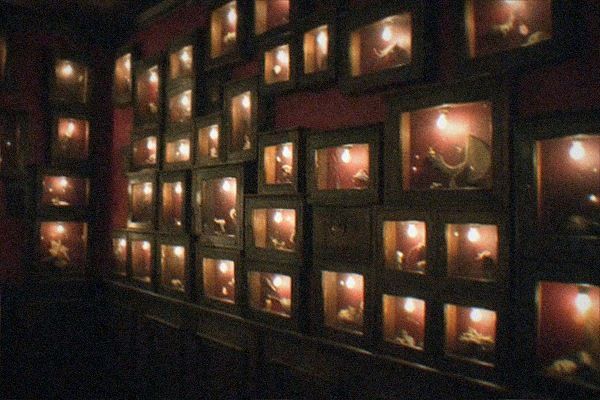
Visitor guide to the Museum of Jurassic Technology in Culver City: suggested-donation admission, hours, parking, transit options and how long to allow.
Current admission is on the museum's own ticket page.
Official tickets →Opens the museum's own website. Book on the official site; nothing is charged on this page.
Behind an unmarked storefront on Venice Boulevard in Culver City, the Museum of Jurassic Technology presents dimly lit galleries devoted to subjects that may or may not be real: a bat that flies through walls, horned human portraits, micromosaic art mounted on a needle's eye, and a room dedicated to the dogs of the Soviet space program. It is part cabinet of curiosities, part artwork in its own right, and it has quietly become one of the strangest permanent attractions in Los Angeles. This page covers the practical side of a visit: what admission actually costs, the opening hours, where to park, and how to reach the building without a car.
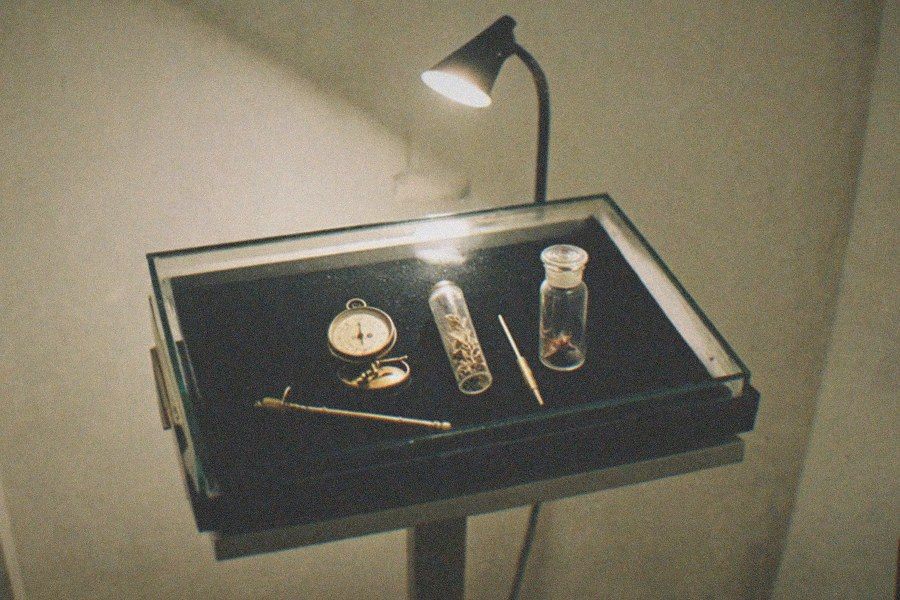
The Museum of Jurassic Technology is a small, deliberately eccentric museum on Venice Boulevard in Culver City, presenting a mix of scientific exhibits, artistic installations and historical curiosities that blur the line between fact and invention. It occupies a modest storefront building and is best understood as an artwork built in the form of a museum rather than a conventional institution. Visitors should expect dim lighting, narrow corridors, low-tech display cases and a tone of absolute seriousness applied to subjects that often turn out to be invented.
The museum was founded by David Wilson and Diana Wilson and has operated at its current address, 9341 Venice Boulevard, for decades. Its exhibits include the stereographic radiographs of Michael K. Kuhns, a gallery on the Deipnosophist's cabinet of Athanasius Kircher, a display on the Sonnabend theory of memory and forgetfulness, and the celebrated micromosaics of Henry Dalton, in which thousands of individual glass fragments are arranged inside the eye of a needle. None of these displays announces which parts are genuine scholarship and which are elaborate fictions, and the museum itself declines to settle the question. That ambiguity is the point.
The building is small enough that it is easy to walk past. The entrance is set back from the street, the signage is minimal, and the interior is a warren of small rooms spread over two levels, including a rooftop area where tea is traditionally served to visitors. The scale matters for planning: this is not a full-day museum like The Getty Center, but a place that rewards slow, patient looking rather than coverage.
The museum's theme on this site is listed as quirky and unusual, which places it alongside a very small number of Los Angeles institutions that exist primarily as singular experiences. It shares Culver City with The Wende Museum, a free museum of Cold War history on Culver Boulevard, and the two are often mentioned together by visitors building an unusual day out on the west side of the city.
Admission to the Museum of Jurassic Technology is a suggested donation rather than a fixed ticket price. The exact adult amount is unverified, so the current suggested donation should be checked on the museum's own site before visiting. There is no third-party ticket product for this museum anywhere: it is an official-site-only institution, and payment is handled at the door rather than through a booking platform.
Because admission works as a donation, the practical experience differs from most paid museums in Los Angeles. There is no timed-entry reservation to book in advance, no online checkout, and no third-party reseller involved. Tiqets, Klook and Trip.com were all probed by name and none of them sell any Los Angeles museum, so any page offering a Museum of Jurassic Technology ticket through those platforms should be treated with caution. The correct route is the museum's own site at mjt.org, which carries the current visitor information including the suggested donation and any policy changes.
| Ticket type | Price | Where to buy |
|---|---|---|
| General admission | Suggested donation, amount on the official site | On the door at 9341 Venice Boulevard |
| Advance online ticket | Not offered | n/a, official site only |
| Third-party ticket | Not sold on any platform | n/a |
Visitors comparing this to the city's larger institutions should note how different the pricing models are. The Academy Museum of Motion Pictures charges a fixed $25 adult admission on the Miracle Mile, while the Getty museums are free to enter with paid parking. The Museum of Jurassic Technology sits in neither camp: it is inexpensive by any standard, but it is not listed as free on this site because the donation is expected rather than optional in practice.
It is worth carrying a small amount of cash or checking the accepted payment methods on the museum's site before a visit. Small donation-based institutions sometimes have limited card facilities, and the museum's own visitor information page is the authoritative source for what is accepted at the desk.
The Museum of Jurassic Technology is closed on Monday, Tuesday and Wednesday every week. It opens Thursday through Sunday, and the exact opening and closing times for each day are published on the museum's own hours page, which is the only authoritative source. Visitors planning a weekend trip have the most schedule flexibility; weekday visits are only possible on Thursday and Friday.
The three-day weekly closure is one of the longest among Los Angeles museums and catches out a lot of visitors. Several other quirky or small institutions in the city follow similar patterns: the Museum of Neon Art in Glendale is also closed Monday through Wednesday, and The Wende Museum in Culver City is closed Monday and Tuesday and opens to the public only Friday through Sunday. If a Monday visit to the west side is unavoidable, the options narrow considerably, and it is worth checking whether other institutions on an itinerary share the same closed days.
| Fact | Detail |
|---|---|
| Address | 9341 Venice Boulevard, Culver City, CA 90232 |
| Area | Culver City |
| Hours | Thursday to Sunday, times on the official site |
| Closed days | Monday, Tuesday and Wednesday |
| Admission | Suggested donation, amount on the official site |
| Parking | Paid street and lot options nearby, details on the official site |
| Time to allow | One to two hours for the galleries |
For current hours, any holiday schedule changes and the suggested donation amount, the museum's own page at mjt.org is the reference to check close to the date of travel. Small museums adjust their schedules more often than large ones, and this institution has a history of seasonal variations in its opening pattern.
Parking near the Museum of Jurassic Technology is paid, using a mix of metered street parking on Venice Boulevard and surrounding blocks and commercial lots in downtown Culver City. No verified parking price for this museum exists in this site's research, so no figure is quoted here; current rates and any validated lot arrangements should be confirmed on the museum's own site before visiting.
Venice Boulevard is a wide, busy commercial corridor, and the blocks immediately around 9341 Venice Boulevard carry metered curb parking with time limits that vary by block and time of day. Downtown Culver City, a short walk east of the museum, has municipal and private lots that charge by the hour, and these tend to fill on Thursday and Friday evenings and all weekend, which are exactly the days the museum is open. Arriving earlier in the afternoon on an open day generally makes the street search easier.
Visitors used to the big museum campuses should recalibrate expectations. At The Getty Villa and The Getty Center, parking is a flat, verified $25 per car, dropping to $15 after 3pm, because those institutions run their own lots. The Museum of Jurassic Technology has no equivalent facility: it is a storefront museum in an urban commercial strip, and parking is whatever the neighborhood offers. That means reading meter signs carefully, watching for street-cleaning hours, and being prepared to walk a few blocks on busier days.
Because the museum visit itself is short, typically one to two hours, it is worth matching the parking choice to the length of stay. A short metered spot close to the door suits a quick visit; a municipal lot a few blocks away suits a longer trip that combines the museum with lunch or the Culver City galleries. Whatever the choice, the museum's own visitor information page is the place to confirm anything specific, such as whether a nearby lot validates.
The Museum of Jurassic Technology is reachable by public transit, using Los Angeles Metro bus lines that run along Venice Boulevard and through Culver City, with the E Line light rail serving the wider Culver City area. Journey planning and live schedules should be checked on metro.net, the Los Angeles County transit authority's official site, before setting out.
Venice Boulevard itself carries major east-west bus service, and the museum's address sits directly on that corridor, which makes a bus ride one of the simpler car-free museum trips in the city. The E Line, which runs between downtown Los Angeles and Santa Monica, stops in Culver City at stations a manageable walk or short connecting ride from Venice Boulevard. From downtown LA, the trip is direct in a way that few of the city's museum corridors are: the visitor does not need to change between rail and a long walk, only between rail and bus or a modest on-foot segment.
Cycling is also realistic. Culver City has invested in bike infrastructure along several of its main corridors, and the flat terrain of the Westside makes the approach along Venice Boulevard straightforward. For visitors combining the museum with other Culver City stops, such as The Wende Museum on Culver Boulevard, a bike or a single bus fare covers the whole day without parking worries.
For anyone staying downtown, the transit option is worth taking seriously. The museums clustered on Bunker Hill, including The Broad and MOCA Grand Avenue, sit near the downtown end of the same transit spine, so a car-free itinerary can pair a downtown morning with a Culver City afternoon. Checking service frequency on metro.net matters more here than on a rail-only trip, since Venice Boulevard buses run less often than the E Line trains, particularly on Sundays when the museum is open.
A visit to the Museum of Jurassic Technology takes most people between one and two hours, which reflects both the small size of the building and the slow pace the exhibits demand. It is not a half-day or full-day institution, and it pairs naturally with other Culver City attractions rather than filling a day on its own. The museum is not a day-trip destination in the way that outlying institutions are.
The pacing inside is unusual. Exhibits are designed to be read, listened to and puzzled over, and several rooms include audio elements delivered through handsets or speakers that run on their own schedule. Racing through defeats the purpose, but the total floor area is genuinely small, so even a thorough visit rarely exceeds two hours. Visitors who stay for tea on the rooftop, a traditional part of the experience, should add a little time.
Culver City supports a full afternoon around the visit. The Wende Museum, free and open Friday through Sunday, is a ten-minute walk away on Culver Boulevard and covers Cold War art and artifacts. The city's downtown blocks offer restaurants and galleries, and the Baldwin Hills overlook is a short drive for anyone with a car who wants a view to end the day. For visitors assembling a broader museum itinerary across Los Angeles, the practical pairing advice is simple: the Museum of Jurassic Technology works best as a one-to-two-hour insert in a Culver City afternoon, while institutions like The Getty Center or the Academy Museum of Motion Pictures are the anchors that justify a full block of the day.
One last planning note: because the museum is closed Monday through Wednesday, the open days of Thursday to Sunday coincide with the busiest days in downtown Culver City. Booking nothing in advance is required, since admission is a donation at the door, but arriving outside peak lunch and dinner hours makes both the street parking and the gallery space more comfortable.
Admission is a suggested donation rather than a fixed ticket price. The exact adult amount is unverified, so check the museum's own site at mjt.org before visiting. There is no online booking and no third-party ticket seller; payment is handled at the door at 9341 Venice Boulevard.
The museum is closed every Monday, Tuesday and Wednesday. It opens Thursday through Sunday, with exact hours published on the museum's own hours page. This three-day weekly closure is one of the longest among Los Angeles museums, so weekday visits are only possible on Thursday and Friday.
Parking near the museum is paid, using metered street parking on Venice Boulevard and surrounding blocks plus commercial lots in downtown Culver City. No verified parking price exists in this site's research, so confirm current rates and any validated lot arrangements on the museum's own site before visiting.
No. The museum is an official-site-only institution with no advance ticket product. Admission is a suggested donation paid at the door, and no third-party platform sells tickets for it. Tiqets, Klook and Trip.com were all probed by name and none of them sell any Los Angeles museum.
Most visitors spend between one and two hours. The building is small, but the exhibits are designed to be read and puzzled over slowly, and tea is traditionally served on the rooftop. It is not a full-day museum and pairs well with other Culver City stops such as The Wende Museum.
Yes. Venice Boulevard carries major east-west Metro bus service directly past the museum, and the E Line light rail serves the wider Culver City area. Journey planning and live schedules should be checked on metro.net, the Los Angeles County transit authority's official site, before setting out.
It is not listed as free on this site. Admission is a suggested donation rather than a fixed price, and the exact adult amount is unverified, so the current figure should be checked on the museum's own site. The donation is expected rather than optional in practice.
The Wende Museum, a free Cold War museum on Culver Boulevard, is about a ten-minute walk away and is open Friday through Sunday. Downtown Culver City offers restaurants and galleries. The Museum of Jurassic Technology works best as a one-to-two-hour part of a Culver City afternoon rather than a full-day destination.
Glendale, Glendale
Museum of Neon Art in Glendale: $10 admission, open Thursday to Sunday, paid parking nearby, and what to expect from LA's museum of neon signs and kinetic art.
Official tickets →