How Much Are Tickets To The Natural History Museum In Los Angeles?
Adult tickets to the Natural History Museum of Los Angeles cost $18 at the door, with an LA County resident free window on weekday afternoons. Here is how pricing, hours and parking really work.
How Much Are Tickets To The Natural History Museum In Los Angeles?
General admission is $18 per adult at the door, and prebooked tickets through the operator's live listing also start at $18. Children and discounted categories pay less, LA County residents can get in free on weekday afternoons but only on site, and the museum closes on the first Tuesday of every month. The ticket price is the simple part; the timing rules around it are where most visits go wrong.
The Natural History Museum in Exposition Park is one of the few large museums in Los Angeles that sells a straightforward admission product. At $18 for an adult, it sits in the middle of the city's museum price range: cheaper than the Academy Museum's $25 door price, more than the Museum of Tolerance's $16, and far below the Warner Bros. Studio Tour at $79. What makes it unusual for Los Angeles is that the door price and the prebooked price are the same, so buying ahead is not about saving money. It is about skipping the ticket line on a weekend afternoon, when school groups and family crowds stack up at the entrance on Exposition Boulevard.
The $18 covers the permanent halls, and those halls are the reason most people come. The dinosaur collection is the headline: complete mounts of a Tyrannosaurus growth series, a Triceratops, and the long-necked sauropods that anchor the main rotunda. Beyond the dinosaurs there are the gem and mineral vaults, the insect zoo, the Nature Lab, the African and North American mammal dioramas, and the outdoor Nature Gardens. A realistic visit runs two to three hours, and the building is large enough that a family with young children can easily spend half a day without touching everything.
What the base ticket does not cover is the rotating special exhibitions, which are ticketed separately at the museum's own discretion, and any add-on programming like guided tours or events. If a blockbuster show is running, check the museum's own site for the exhibition surcharge before assuming the $18 is the whole cost. The general admission figure itself is stable and printed plainly on both the door and the live listing.
There is one group that should never pay at all: visitors 17 and under are not the free group here, that distinction belongs to other museums in the city, but LA County residents have a free window that is genuinely generous and genuinely restricted at the same time. The details of that window are worth their own section below, because the conditions attached to them trip up a lot of visitors.
For everyone else, the practical advice is simple. Buy the timed ticket ahead if you are visiting on a weekend, a holiday week, or during summer, because entry slots at popular hours do fill. On a quiet weekday morning you can walk up and pay at the counter with no penalty, since the prices match.
| Ticket category | Price | Notes |
|---|---|---|
| Adult general admission | $18 | Same price at the door and prebooked |
| Special exhibitions | Priced separately | Surcharge varies by show, check the museum's site |
| LA County residents | Free on weekday afternoons | On site only, ID required, hours quoted as 3pm to 5pm |
| Prebooked product | From $18 | Skips the on-site ticket queue |
If you are building a bigger Exposition Park day, the museum pairs naturally with its neighbors, and the ticket strategy changes accordingly. The California Science Center next door is free to enter, the California African American Museum across the park is free as well, and both are covered in the site's guide to the best science museums in Los Angeles. A prebooked Natural History Museum ticket plus a free Science Center walk-in is the standard efficient day.
What Are The Natural History Museum's Hours And Closed Days?
The Natural History Museum is open daily except the first Tuesday of every month, when it is closed entirely for maintenance and school programming. Standard hours run from morning to late afternoon, with the last entry well before closing time. First-time visitors should also know that the resident free window only exists on weekday afternoons, so the calendar and the clock both matter.
The first Tuesday closure is the single most important scheduling fact about this museum, and it is the one that catches people out. Unlike the Getty Center, which closes every Monday, or LACMA, which closes every Wednesday, the Natural History Museum's closed day moves around the calendar. A visit planned for the first weekend of the month is safe; a visit planned for the first Tuesday is not, and there is no partial-day access. If your trip dates are fixed, check which Tuesday falls first in your month before locking anything else in.
Regular daily hours are generous enough for a full visit but not for an evening one. The museum operates on a daytime schedule, opening in the morning and closing in the late afternoon, and the ticket desk stops selling well before the doors shut so that the last visitors still get a reasonable stretch inside. If you arrive inside the final hour, expect a compressed experience. The dinosaur halls and the rotunda are near the entrance and can be done quickly, but the Nature Lab, the gardens and the upper floors reward a slower pace.
Holiday periods behave differently from the regular calendar. Summer weeks, winter break and spring break bring extended crowds, school group bookings in the mornings, and heavier demand on timed tickets. The museum also runs seasonal programming, from butterfly pavilion seasons to evening events, and those can change the character of a visit entirely. The butterfly pavilion, when running, is a separate ticketed outdoor experience and one of the most popular add-ons in the building; if it is open during your dates, expect it to draw families who arrived specifically for it.
One practical note on arrival timing: the museum shares Exposition Park with the California Science Center, the California African American Museum and the Memorial Coliseum, and on game days or event days at the Coliseum the surrounding streets and parking lots change character completely. A quiet museum morning can collide with a stadium afternoon. Checking the Coliseum calendar takes two minutes and can save you a stressful parking hunt.
If you are planning around closed days across the city, the Natural History Museum's first-Tuesday rule pairs well with museums that close Mondays, since the two closures rarely collide. The site's guide to Los Angeles museums open on Monday covers the Monday problem in full.
When Can LA County Residents Get In Free?
LA County residents can enter the Natural History Museum free on weekday afternoons, a window quoted as 3pm to 5pm, but only by buying on site with valid ID. Prebooked tickets do not qualify, weekends do not qualify, and the hours are a single-pass figure worth confirming before you plan a trip around them.
The resident free window is real and it is genuinely useful, but it comes with restrictions that matter. The window exists only on weekdays, only in the late afternoon, and only for visitors who can show valid ID proving LA County residency and who pay, or rather do not pay, at the on-site ticket counter. You cannot combine it with a prebooked ticket, and you cannot shift it to a weekend. If you live in the county and your schedule allows a weekday 3pm arrival, the museum is effectively free for you. If it does not, the $18 stands.
The hours of the window deserve a caveat. The 3pm to 5pm figure is quoted from a single research pass, and afternoon windows at LA institutions have a history of shifting, as LACMA's own resident free policy shows with its weekday after-3pm rule. Before building a trip around the free window, confirm the current hours on the museum's own site. The principle, though, is stable: weekday afternoons, county ID, on-site transaction.
There is a planning trade-off inside this window that is worth stating plainly. Arriving at 3pm means you get two hours or less inside a building that rewards three, and the last hour thins out as staff begin closing routines. Residents who want the full experience sometimes conclude that paying $18 for a morning entry is better value than a free compressed afternoon. Visitors on a strict budget reach the opposite conclusion, and a free two-hour visit centered on the dinosaur halls and the gem vault is entirely satisfying on its own.
For out-of-town visitors the window is irrelevant, and the honest comparison is against other LA museums' resident policies. LACMA gives LA County residents free general admission on weekdays after 3pm with ID, the Academy Museum gives under-17s free entry every day, and the Norton Simon in Pasadena is free for students and under-18s at all times. None of these help a tourist, which is why the prebooked ticket remains the standard advice for visitors from outside the county.
The prebooked product itself is worth a look even for price-insensitive visitors, because it removes the one variable the door price cannot: the queue. On a summer Saturday the ticket line at Exposition Boulevard can run long, and a timed entry walks past it. The product rates 4.6 across 522 reviews, a large and stable review base by the standards of Los Angeles museum listings, and the price matches the door at $18. You can Check availability at the operator's live listing.
Is Parking At Exposition Park Free?
No, parking at Exposition Park is paid, and there is no verified per-hour figure to quote for the lots around the Natural History Museum. Rates are set by the park and by event demand at the Coliseum, they rise on game and event days, and the honest advice is to check the museum's own site or the park's official parking page before driving in.
Parking is the cost that surprises people at Los Angeles museums more than any ticket price, and Exposition Park is a case study in why. The museum's $18 admission is simple; the parking around it is dynamic. The shared lots serve the Natural History Museum, the California Science Center, the California African American Museum and the Memorial Coliseum, and when the Coliseum hosts an event, those lots fill early and prices climb. On a quiet weekday morning the lots are half empty and the walk to the entrance is short. On a Saturday with a game or a concert, arriving after noon can mean circling or parking blocks away.
This site's parking research could not verify a flat rate for the Exposition Park lots, and the rule here is strict: no guessed figures. What can be said with confidence is that parking is paid, that it is charged per entry or per event depending on what else is happening in the park, and that the museum's own site carries the current rates. Compare that with the verified figures elsewhere in the city, where the Getty Center charges $25 per car, dropping to $15 after 3pm, and the picture is consistent: in Los Angeles the ticket is often the smaller, more predictable cost.
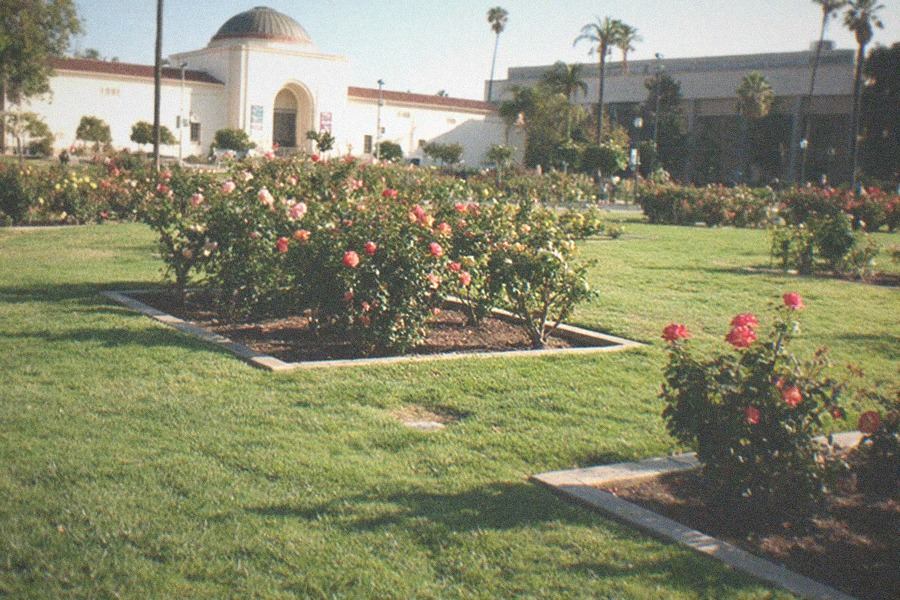
There are two real alternatives to driving. The Metro E Line stops at Exposition Park directly, with the station a short walk from the museum entrance, and it is the answer for anyone staying downtown or along the Expo corridor. The second is the residential street parking farther out, which exists but is permit-restricted in patches and competitive on weekends, and which turns a museum visit into a parking hunt. For a family of four, the transit math usually beats the lot math once event pricing kicks in.
If you are pairing the Natural History Museum with the California Science Center on the same day, the parking question covers both, since they share the same lots. The site's breakdown of California Science Center parking covers the same ground from the other side of the park and is worth reading before you drive in.
How Does The Museum Pair With The Science Center Next Door?
The Natural History Museum and the California Science Center sit a few minutes' walk apart inside Exposition Park, and they make a natural full-day pairing: the Science Center's permanent galleries are free, the Natural History Museum is $18, and combining them means one parking payment, one transit ride and two very different museums. The one thing to check is what the Science Center currently has on display.
The pairing works because the two museums complement rather than duplicate each other. The Natural History Museum is about the deep past and the natural world: dinosaurs, minerals, mammals and the gardens. The California Science Center is about how things work: space hardware, ecosystems, physics exhibits and rotating science displays. A family with kids can do the dinosaur halls in the morning, walk across the rose garden to the Science Center after lunch, and finish the day without moving the car. The rose garden between the two buildings is one of the nicer free interludes in the park, and on a clear afternoon it is the best photo spot in the complex.
The Science Center's pricing structure is the mirror image of its neighbor's. Permanent galleries are free, no reservation needed for general entry, while IMAX films, special exhibitions and groups of 20 or more are ticketed. That makes it one of the eleven free museums on this site's list, and the site's guide to free museums in Los Angeles names all of them with the catches attached. The catch at the Science Center is the one thing every visitor should know before going: Space Shuttle Endeavour is off display until the Samuel Oschin Air and Space Center opens on 13 November 2026. Visitors who arrive expecting to see a space shuttle will not see one.
Timing the pairing is straightforward. The Natural History Museum closes on the first Tuesday of the month; the Science Center is open daily. So a first-Tuesday visit flips the order: start at the Science Center, which will be open, and save the Natural History Museum for another day. On any other day, the order matters less, though the dinosaur halls are quietest in the first hour after opening and the Science Center holds its crowd better in the afternoon.
For visitors extending the Exposition Park day further afield, the same transit line and the same parking decision serve a longer southern arc. The Aquarium of the Pacific sits up in Long Beach, about a day trip's distance from Exposition Park, and its ticket runs $49.95 at the door with prebooked products from $50; the site's piece on Aquarium of the Pacific discount tickets covers the honest ways to reduce that. The aquarium rates 4.5 across 794 reviews, the largest review base of any science-and-nature product in this city's lineup, and children under 3 enter free on the ticket sold through the operator. It is not strictly a museum, and this site says so plainly, but it fills the same slot in a family itinerary.
The wider lesson from Exposition Park is that Los Angeles rewards visitors who plan around clusters rather than single destinations. Museum Row on the Miracle Mile works the same way: the Academy Museum, the Petersen and the La Brea Tar Pits sit within blocks of one another, and this site's coverage of Los Angeles Museums is organized around exactly these clusters. Exposition Park is the easiest cluster in the city, because two of its three museums are free and all three share one parking decision.
A final note on the day-trip logic. If the Natural History Museum is your anchor, the Science Center is the obvious second stop, and the California African American Museum, also free and closed Mondays, rounds out the park. Three museums, one $18 ticket between them, one parking payment or one train ride. That is the best value museum day inside the city limits of Los Angeles, and it is available almost every day of the year except the first Tuesday of the month.
Common Questions About Natural History Museum Tickets And Hours
How Much Are Tickets To The Natural History Museum In Los Angeles?
Adult general admission is $18, the same price at the door and prebooked through the operator's live listing. Children and other discounted categories pay less, LA County residents can enter free on weekday afternoons with ID on site only, and special exhibitions are ticketed separately.
What Days Is The Natural History Museum Closed?
The museum closes on the first Tuesday of every month. Every other day of the month it operates on its regular daytime schedule, with the ticket desk stopping sales before closing so the last visitors still get time inside.
Do LA County Residents Get In Free?
Yes, on weekday afternoons only, in a window quoted as 3pm to 5pm, purchased on site with valid ID. Prebooked tickets do not qualify and weekends do not qualify. Confirm the current window hours on the museum's own site before planning around it.
Is Parking At The Museum Free?
No. Exposition Park parking is paid, and rates rise on Coliseum event days. No verified flat rate exists for the lots, so check the museum's own site for current pricing, or take the Metro E Line, which stops at the park a short walk from the entrance.
How Long Does A Visit Take?
Two to three hours covers the dinosaur halls, the gem vault, the mammal dioramas and the Nature Lab at a comfortable pace. Families with young children routinely spend half a day, especially when the butterfly pavilion or a special exhibition is running.
Can You Visit The California Science Center The Same Day?
Yes, and it is the standard pairing. The Science Center sits a few minutes' walk away inside the same park, its permanent galleries are free, and it is open daily. Note that Space Shuttle Endeavour is off display until the Samuel Oschin Air and Space Center opens on 13 November 2026.
Should You Buy Natural History Museum Tickets In Advance?
Advance booking does not save money, since the prebooked price matches the $18 door price. It saves the ticket queue, which matters on weekends, holiday weeks and summer mornings. The prebooked product rates 4.6 across 522 reviews.